Business leaders, among others, ask govt to let go of fiscal target, seek stimulus, and direct cash transfer.

Equity indices faced a heavy drubbing on Thursday after an initial rally, with Sensex tanking 1,045.60 points amid a largely bearish trend overseas after the US Federal Reserve hiked rates by 75 basis points.
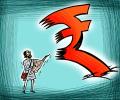
Indian rupee, which earlier this week touched an all-time low, is likely to remain under pressure and may test new levels as a fallout of the US Federal Reserve indicating more interest rate hikes, experts said. The aggressive rate hikes will dampen demand and increase the possibility of a recession in the US. This could accelerate the pace of capital outflows, weaken the rupee and raise the threat of imported inflation.

Life insurers, on the prodding of global reinsurers, are set to hike premiums on term plans because rising mortality after the second wave of the pandemic has led to an increase in the number of settlements. Some will do so next month while others may wait till January. Global reinsurer Munich Re had nudged its insurance partners on the hike in September and insurers have been engaged in negotiations with the reinsurer on the amount of the increase. Term plan prices in India were among the lowest in the world for a long period but in the past couple of years, they have been increased a few times.

The average rate of COVID-19 vaccination in the country has been 10.8 million per week. At that rate, it will take India till December 2024 to complete two billion doses.

'You have to explain to them about Indian investments in the US creating jobs this reverse outsourcing'

Equity benchmarks Sensex and Nifty halted their five-day rally on Tuesday and settled deep in the red, mirroring weak global markets, with decline in index heavyweights Reliance Industries, Infosys and HDFC Bank. Despite opening with gains of over 200 points, the 30-share Sensex turned highly volatile and tumbled 709.17 points or 1.26 per cent to close at 55,776.85. During the day, the benchmark index plunged 1,067.07 points or 1.88 per cent to 55,418.95. The broader NSE Nifty also declined 208.30 points or 1.23 per cent to close at 16,663.

'When people look at Kohli, they see a boy from Delhi who is taking on the Aussies in their own backyard and aspire to be like him.' 'Players like Jadeja and Ashwin lack this quotient.'

Sharda said Pakistan was frustrated ever since Prime Minister Narendra Modi and home minister Amit Shah took charge and was resorting to all sorts of tactics against India as it could not register a single victory in any battle.
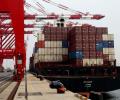
The FIEO on Thursday reiterated that the Customs authorities at several ports in India had ordered a sudden examination of Chinese consignments without any official word from the government, and this may have led to the Chinese retribution.

The spike in volatility may not have impacted equity inflows, but it has weighed on new investors coming via the systematic investment plan (SIP) route. In May, 1.97 million new SIPs got registered - nearly 15 per cent lower than the previous five-month average of 2.3 million - reveals the data provided by the Association of Mutual Funds in India. Since June 2021, new SIP registrations have been upwards of 2 million each calendar month. The new SIP tally in May was the lowest in 12 months.

The words 'industry', 'industrial development', 'jobs', and 'employment' have been ringing with higher frequency since Mamata Banerjee stepped into her third term with landslide victory after a high-octane election last year. "Our government's next target is industrial development," the chief minister (CM) had been heard stating at different public meetings in the past few months - perhaps setting the tone for the sixth edition of the Bengal Global Business Summit (BGBS) slated for later this month. Investor summits by any state are about intent, big numbers, and tall claims. Yet in competitive federalism, its importance as a marketing tool is undeniable.

The Union government will soon make amendments to the foreign trade policy (FTP) to enable exporters to claim export benefits for settling trade in rupees. These benefits are, so far, available for export payments received in foreign currencies. After the Reserve Bank of India (RBI) unveiled a mechanism to settle international trade transactions in the local currency on Monday, exporters have been demanding that the Ministry of Commerce and Industry come up with a clarification on the matter.

The venture, they said, would focus on technology and media opportunities in emerging markets. Industry sources said the focus would be on digital media, with India being the big driver.

'For our traditional membership base, it would be an access to disruptive ideas,' FICCI President Subhrakant Panda tells Asit Mishra/Business Standard.

Jewellers went on strike for three days from March 2.

Long-distance runner Lalita Babar was named Sports Person of the Year at the India Sports Awards 2015 in New Delhi on Monday.

Companies today are taking a very fashionable way to reduce their workforce. Instead of the outright firing of employees, an alternative approach that some companies are using is the passive-aggressive method which is both deliberate and accidental, points out corporate lawyer Ishanee Sharma.

'India seems to be on a relatively better wicket compared to other emerging markets.'

Benchmark indices failed to hold on to early gains and closed in the red for the seventh straight session on Thursday, with participants remaining in wait-and-watch mode ahead of the RBI's interest rate decision. Unabated selling by foreign funds added to the pressure, though a modest recovery in the rupee cushioned the fall, traders said. After rallying in early trade, the 30-share BSE Sensex came under selling pressure in the afternoon session and closed 188.32 points or 0.33 per cent lower at 56,409.96.

Trump has repeatedly blamed countries like India and China for not doing enough on climate change, labelling them as regions with air that is impossible to breathe.

India's tennis players -- both current and former -- are not just counting financial losses as they cope with the fallout of the coronavirus pandemic. The closure of the Pro Tour means that doubles exponent Purav Raja is set to lose at least $50,000 in this lockdown period, according to his own assessment. Prajnesh Gunneswaran, Jeevan Nedunchezhiyan and Divij Sharan can't exactly tell how much they would lose but considering the fact that they are consistently in contention to be in Grand Slam main draws, the massive financial hit is not difficult to assess.

Collectively, the pack of 12 has posted a 50 per cent rise in profits -- Rs 25,685 crore. On a quarter-on-quarter basis (that is, September over June), the rise is 68 per cent. Public sector banks have never had such a stellar performance, explains Tamal Bandyopadhyay.

Since April, India has seen multiple strains of the coronanavirus sweep the nation, upending life and businesses alike. Out-of-home retail and discretionary categories such as durables, auto, fashion, lifestyle, hospitality, food services, travel, and tourism have been the worst-hit as Covid cases remain high, leaving state governments with no option but to curtail mobility and economic activity.

Why does the world's fastest-growing major consumer of energy fail to attract investments in oil and gas? This is a question worth pondering after private sector conglomerate Reliance Industries Ltd (RIL) failed to close a $15-billion downstream asset deal with Saudi Arabia's national oil company, Aramco. It's understandable if multi-billion dollar investments in oil and gas projects or deals involving state companies that need to traverse a complex bureaucracy at state and federal levels and the corridors of ministries unravel. However, Mukesh Ambani-run RIL, India's most successful energy company, is not typically known to fumble on closing deals (Ambani closed deals worth around Rs 2 trillion early last year in telecom and retail with blue chip investors).

The government may roll out a new foreign trade policy (FTP) of a shorter term of two-three years in a bid to keep pace with the fast-evolving scenarios in international trade which have been triggered by recent disruptions, such as the pandemic and the Russia-Ukraine war. An FTP is an elaborate policy guideline and strategy to promote the export of goods and services, with a duration of five years usually. The existing policy came into force on April 1, 2015, and was valid for five years, before multiple extensions.

West Bengal Chief Minister Mamata Banerjee on Wednesday assured farmer leaders led by Rakesh Tikait and Yudhvir Singh of support to their agitation against the new agriculture laws.
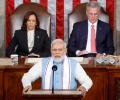
Here's the full text of Prime Minister Narendra Modi's address to a joint session of the United States Congress, delivered on Thursday.

French companies have invested more than $1 billion per year in India.

"So you will not have anything better... democracy loving, capitalist respecting environment... in India," Sitharaman said at the event hosted by the Federation of Indian Chambers of Commerce and Industry in association with the US India Strategic and Partnership Forum.
India Inc on Tuesday expressed deep reservations over the supplier liability provision -- the contentious Clause 17(b) -- in the Civil Liability for Nuclear Damages Bill, 2010, saying it would seriously hinder nuclear commerce.

The declining exports would have implications for the job market.

It is the season of cooking and baking, but with Amul Butter in short supply, consumers aren't like the cat that got the cream. A shortage only means market shelves without butter on them. "There is a supply-side deficit. "We are now able to procure only two packs of butter a day, as opposed to three packs (each containing 30 packets of butter) in a day," says a salesman at Modern Bazaar, a departmental store in New Delhi's Greater Kailash.

'The idea is to invest where there is opportunity.'

The intensity of power crisis this season has hit a new high with average coal stock dipping to less than eight days. The first of a pan-Indian series, based on a ground report, shows how the Manesar industrial hub is coping with the challenge. As the scorching heat wave and the lengthy power cuts intensify in Haryana, the usually bustling labour chowk of the Industrial Model Township (IMT) of Manesar wears a deserted look.
Exporters on Thursday demanded fiscal incentives, tweaking in customs duties on certain products and credit at affordable rates in the forthcoming Budget to boost exports and create jobs. In a pre-budget virtual meeting with Finance Minister Nirmala Sitharaman, the Federation of Indian Export Organisations (FIEO) said the depreciation of the rupee against the US dollar is affecting exports' competitiveness and the sector requires more support. "Creation of employment is the biggest challenge faced by the country...We would urge the government to provide fiscal support to units which provide additional employment in the export sector," the exporter's body said.

The US is set for a geographically limited 5G rollout this Christmas, after a bumper $81 billion spectrum auction earlier this year. Just as the rollout date nears, the US Federal Aviation Administration (FAA) has sounded alarm bells over potentially fatal consequences of 5G interference on aircraft. Similar consequences could apply in India, where 5G spectrum auction is scheduled in January 2022, with the rollout beginning later next year (though reports suggest impending delays).

A depreciating rupee, which briefly hit 80 to the dollar on Tuesday, may boost India's exports but price-inelastic imports of crude oil and gold would mean limited relief on the trade deficit, which clocked a record $26.2 billion in June. Due to global risk aversion on the back of geo-political tensions and aggressive policy tightening by the Fed, the dollar has appreciated against most currencies, including the rupee. And, with other currencies depreciating, India's comparative advantage in this respect may be limited.

Sources said the actor will be questioned about some more issues related to Chandrashekhar.

Investors continue to back-up equity mutual funds in June as such schemes attracted a net inflow of Rs 15,498 crore on strong flows from systematic investment plans despite volatility in the stock market and relentless selling by Foreign Portfolio Investors (FPIs). This also marked the 16th straight month of positive inflow in equity schemes. Inflows into equity mutual funds in June was lower compared to the net inflow of Rs 18,529 crore seen in May, data from the Association of Mutual Funds in India (AMFI) showed on Friday.
